If your idea of home includes calm water, weekend paddles, and a front-row seat to one of Austin’s most iconic natural features, life along Lake Austin can be hard to ignore. You may be dreaming about a waterfront move, or you may just want a clearer picture of what daily life there really feels like. This guide walks you through the lifestyle, home setting, and practical details that shape living along Lake Austin so you can decide whether it fits your goals. Let’s dive in.
Lake Austin Living Feels Structured
One of the biggest things that sets Lake Austin apart is that it is a constant-level reservoir on the Colorado River. According to the Lower Colorado River Authority, the lake spans about 1,830 acres, runs 20.25 miles long, and is generally maintained within a narrow operating range near its full elevation of 492.8 feet msl.
For you as a homeowner or buyer, that often translates to a more predictable waterfront experience than you might expect on a lake with frequent drawdowns or larger seasonal swings. The lake is also part of Austin’s drinking water system, which means everyday life here comes with added water-quality awareness and public-safety oversight.
Daily Life Centers on the Water
Lake Austin is not just a pretty backdrop. It is a working, active recreational lake where boating and paddling are part of normal daily life.
If you enjoy getting out on the water, you have options. The City of Austin notes that kayaks, canoes, and paddleboards are allowed even during holiday periods when personal watercraft face specific restrictions, and motorboats are required to stay on the right side of the lake.
That structure matters because it helps define the feel of the lake. You get an environment that supports recreation while still operating under clear rules that shape safety and traffic flow.
Boating Is Part of the Culture
Boating is one of the most visible parts of the Lake Austin lifestyle. From casual cruises to pulling up near waterfront destinations, the lake supports an active social rhythm that feels both recreational and residential.
A practical example is Walsh Boat Landing, which the city identifies as a public concrete boat ramp on Lake Austin. That public access point shows that the lake is not only about private waterfront homes. It is also part of the broader Austin outdoor lifestyle.
Paddling Offers a Quieter Pace
If you prefer a slower start to the day, paddling can be one of the most appealing parts of living near Lake Austin. Kayaks, canoes, and paddleboards give you a quieter way to experience the shoreline and coves.
For many people, that balance is the real draw. You can enjoy an active lake scene when you want it, then shift to a calmer, more low-key routine the next day.
The Shoreline Is Mostly Residential
Lake Austin’s shoreline is heavily residential, and that shapes the overall feel of the area. Instead of a dense commercial waterfront strip, the setting is better known for private homes, custom waterfront estates, modern architect-designed residences, and properties in gated settings.
That residential pattern is a big reason the lake often feels private and established. Even though it is deeply tied to Austin’s recreation and identity, much of what you experience along the shoreline is rooted in homes rather than retail or tourism.
Waterfront Homes Come With More Complexity
Buying or owning along Lake Austin often means you are evaluating more than the house itself. Waterfront living here can also involve shoreline features, access points, and dock considerations that directly affect how you use the property.
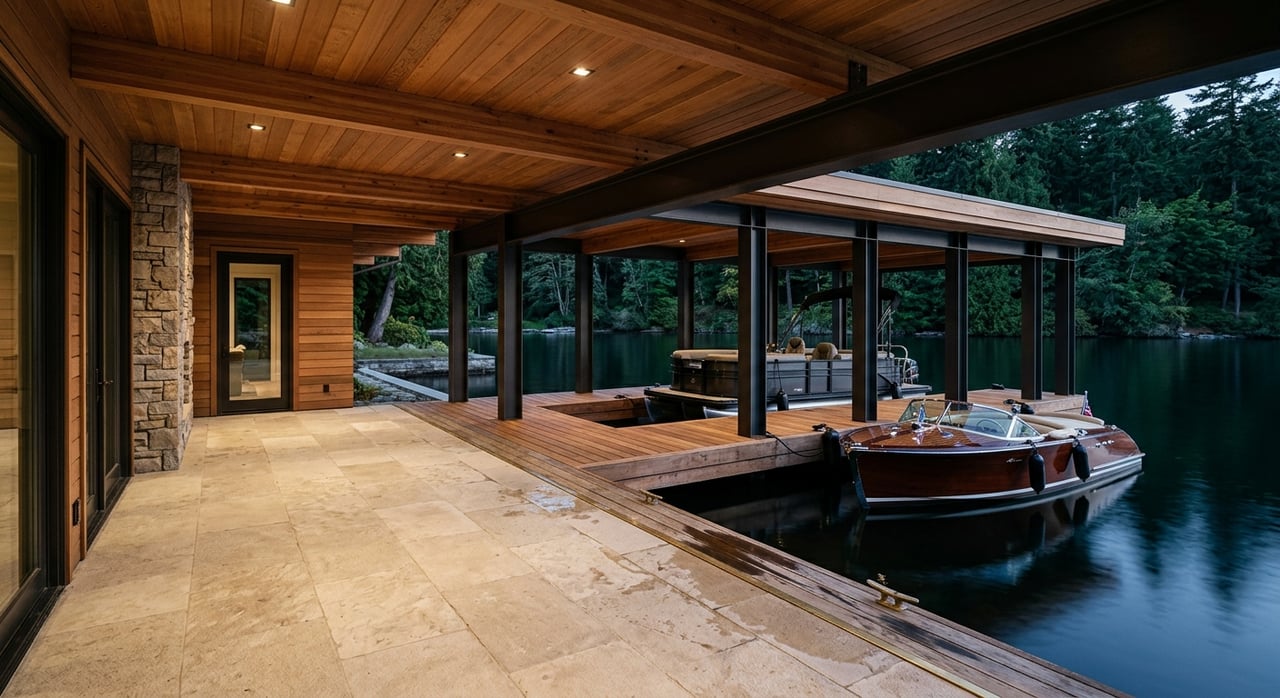
The City of Austin requires approved site plans and permits for residential and commercial boat docks on Lake Austin. The city also runs a dock registration program so public safety personnel can identify docks more easily.
That means docks are not casual add-ons. If you are considering a lakefront property, the dock and shoreline improvements are part of the property story and deserve careful attention.
Different Parts of the Lake Feel Different
Not every stretch of Lake Austin feels the same, and that is part of what makes the area interesting. Some sections feel more natural and tucked away, while others feel more connected to the city and its social energy.
Austin Watershed Protection reports that vegetation is not evenly distributed across the lake. The upper five miles from Mansfield Dam to Lake Austin Spa have the heaviest hydrilla growth, the middle section from Commons Ford Park to Emma Long Metropolitan Park has relatively little, and the lower portion between Ski Shores Cafe and Tom Miller Dam still has thick shoreline growth and dense plants in coves and sloughs.
For you, that can affect how a location feels from the shoreline and on the water. One area may seem quieter and greener, while another may feel more open, active, or close-in.
Closer-In and More Removed Options
Lake Austin can also shift in character based on how close you are to central Austin. City context from West Austin shows a broader corridor that connects areas near Lake Austin with neighborhoods that range from more urban-feeling to more suburban or Hill Country-like.
That range is useful if you are trying to match a home search to your lifestyle. You may want quick access to central Austin, or you may prefer a setting that feels more tucked away while still keeping the lake front and center.
Stewardship Is Part of the Lifestyle
Lake Austin living is not just about views and recreation. It also comes with a level of stewardship because the lake is a drinking-water reservoir and a heavily used public resource.
The city notes that herbicides are not allowed on Lake Austin. Residents and visitors are advised to clean, drain, and dry boats and gear and to dispose of removed hydrilla properly.
That tells you something important about day-to-day ownership here. Living on Lake Austin means enjoying a special setting, but it also means respecting the rules that help protect water quality and manage shoreline conditions.
Waterfront Dining Adds to the Appeal
Part of what makes Lake Austin feel like a lifestyle destination is that the experience extends beyond your property line. Waterfront dining is part of the lake’s social culture, and local spots overlooking the water help reinforce that sense of place.
Visit Austin highlights Hula Hut as a local favorite overlooking Lake Austin. Places like that help show how the lake functions as both a residential amenity and a broader gathering place within the city.
For many buyers, that mix matters. You are not just choosing a house near water. You are choosing a setting where recreation, scenery, and social life often intersect.
What Buyers Should Keep in Mind
If you are seriously considering living along Lake Austin, it helps to look beyond the views. A waterfront purchase here can involve a few extra layers of research and planning.
Some of the most important things to review include:
- Whether the property has a dock and if that dock is permitted and registered
- How the specific stretch of shoreline feels in terms of vegetation, traffic, and access
- What kind of boating or paddling routine fits your lifestyle
- How much value you place on constant water levels versus a more seasonal lake environment
- Whether you want a more close-in Austin setting or a quieter stretch with a more removed feel
With any lakefront home, details matter. On Lake Austin, they matter even more because the setting is highly desirable, highly regulated, and deeply connected to how you will use the property every day.
Why Lake Austin Stands Out
What makes Lake Austin special is not just the water itself. It is the combination of predictable lake levels, private residential shoreline, active boating and paddling, and close connection to Austin.
In simple terms, Lake Austin offers lake living with structure. You get the beauty and recreation people want from waterfront life, along with the rules, maintenance expectations, and practical considerations that come with living on a constant-level reservoir that also serves the city.
If you are exploring waterfront homes, gated properties, or luxury neighborhoods in the Austin area, having local guidance can make a real difference. For thoughtful, personal help navigating Lake Austin and other Austin lifestyle markets, connect with Gay Puckett.
FAQs
Is Lake Austin a constant-level lake?
- Yes. Lake Austin is described as a constant-level reservoir, with LCRA listing a target operating range of 491.8 to 492.8 feet msl.
Can you launch a boat on Lake Austin?
- Yes. Walsh Boat Landing is a public concrete boat ramp on Lake Austin.
Can you kayak or paddleboard on Lake Austin?
- Yes. The City of Austin says kayaks, canoes, and paddleboards are allowed, including during certain holiday periods when personal watercraft restrictions apply.
What kinds of homes are common along Lake Austin?
- The shoreline is mainly residential, with custom waterfront homes, estate-style properties, modern architect-designed residences, and some gated-community settings.
Are docks regulated on Lake Austin properties?
- Yes. The City of Austin requires approved site plans and permits for boat docks, and docks must be registered through the city’s program.
What makes Lake Austin different from other lake communities?
- Lake Austin combines constant water levels, a dense residential shoreline, active boating and paddling, and stricter shoreline and water-use rules because it is also part of Austin’s drinking water system.