Wondering if 78704 is the smart place to buy your first Austin investment property? It is easy to see the appeal. Central location, established neighborhoods, strong amenities, and real Austin character all make this zip code stand out. But for a first-time investor, 78704 is usually not the easiest place to learn on the fly. In this guide, you’ll get a clear look at what makes 78704 attractive, where the risks show up, and how to decide if it fits your goals. Let’s dive in.
Why 78704 gets so much attention
78704 is one of Austin’s most recognized central submarkets, and the numbers help explain why. Census Reporter estimates about 50,688 residents across 8.8 square miles, with a density of roughly 5,778.8 people per square mile. The median age is 34.5, and the median household income is $106,897.
That central-city profile matters if you are buying with location in mind. The City of Austin’s District 9 includes areas like Bouldin Creek and Travis Heights alongside other highly visible central neighborhoods. In practical terms, many buyers look at 78704 as a place where convenience, access, and lifestyle carry real value.
A big part of that appeal comes from the amenity base. Zilker Metropolitan Park covers more than 350 acres and includes Barton Springs Pool, the Butler Hike and Bike Trail, and other major recreation assets. The South Congress corridor also continues to see public investment through the South Congress Public Improvement District, which was created in 2014 and reauthorized in 2019 and 2024.
Why 78704 is not a beginner market
The same things that make 78704 desirable also make it expensive and detail-heavy. Zillow reports the average 78704 home value at $722,362 as of March 31, 2026, down 5.1% from a year earlier. Realtor.com reports 437 homes for sale, a median list price of $799,000, a median price per square foot of $560, and a median of 49 days on market.
Redfin also places the median sale price around $798,000 last month, down 6.2% year over year. So yes, the market has softened from prior highs. But for most first-time investors, this is still a high-cost entry point where small underwriting mistakes can get expensive fast.
That is why 78704 is often better for buyers who want a mix of personal use, long-term flexibility, and possible appreciation. It is often less compelling for investors who need strong cash flow from day one.
What the housing stock looks like
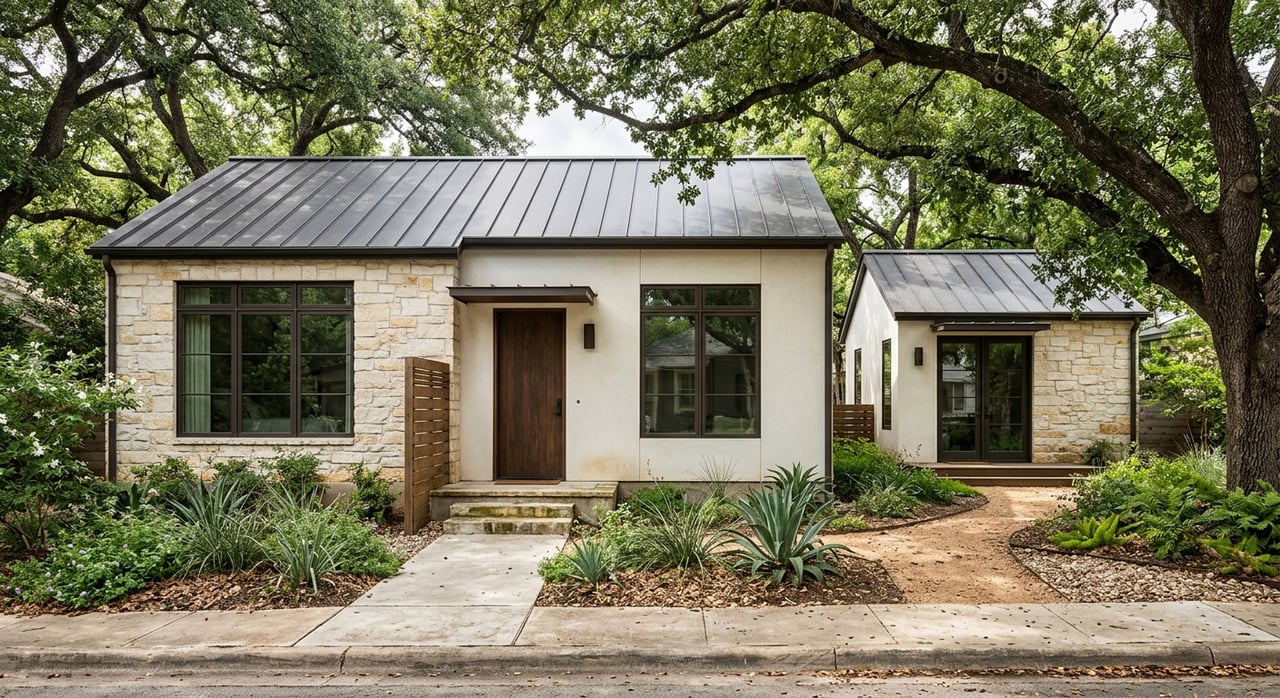
If you are picturing a neighborhood full of newer, similar homes, 78704 may surprise you. In areas like Bouldin Creek, Austin’s planning materials describe small cottages, bungalows, and early-1900s L-plan cottages, alongside later redevelopment. That means your options may vary block by block rather than fitting one clean product type.
Austin planning materials also show that neighborhoods like Bouldin, Zilker, and Travis Heights are part of a central-city housing stock shaped by multiple building eras. In simple terms, you may see older detached homes, renovated single-family properties, and corridor-adjacent attached housing in the same general area. That variety can create opportunity, but it also adds complexity.
For a first investor, this usually means you need to verify exactly what you are buying. Property type, legal use, permit history, and site constraints all matter before you assume a property will support your intended rental plan.
Renovation risks can be higher here
Older homes can offer charm and upside, but they can also come with more rules. The City of Austin says it has more than 600 historic landmarks, 8 local historic districts, and 18 National Register historic districts. The Historic Landmark Commission reviews proposed changes, along with demolitions and relocations of buildings that are 45 years or older and may qualify for landmark status.
For you as a buyer, that means exterior changes, additions, or teardown plans may need closer review than they would in a newer suburban area. If your investment strategy depends on a fast remodel or expansion, you need to understand those constraints before closing.
Zoning is another major factor. The City says zoning controls permitted uses, building heights, setbacks, and impervious cover. Austin’s Property Profile tool is the City’s recommended source for checking official property information and development context.
Site and floodplain due diligence matters
In an inner-city area, the lot can be just as important as the house. Austin Watershed Protection says about 10% of land in Austin is in the floodplain, and development in the 25-year and 100-year floodplains is subject to floodplain regulations. The City’s FloodPro system is the official tool for checking whether a parcel sits in a floodplain or has drainage constraints.
That matters in 78704 because some areas are more affected by creek and drainage conditions than buyers expect. If you are comparing two homes at similar prices, the one with fewer site restrictions may offer much better long-term flexibility.
A smart first investor treats this as part of the initial screening process, not as an afterthought. Floodplain, drainage, legal use, and permit history should all be checked early.
Property taxes can change your math
Purchase price is only part of the story in 78704. Travis Central Appraisal District appraises property in Travis County at 100% of market value, and the Travis County Tax Office notes that TCAD handles property values, exemptions, plat maps, and the protest process.
For investors, this means carrying costs can rise quickly when assessed values move up. In a market where rents do not always keep pace with prices, tax modeling becomes especially important. A deal that looks acceptable at first glance can feel very different once you factor in taxes and reserves.
Does a long-term rental pencil out?
Long-term rental demand appears solid, but the margin for error looks thin at today’s prices. Zillow says the average house rent in 78704 is $2,400, with an average of $2,291 for a two-bedroom apartment and $4,806 for a three-bedroom apartment. Realtor.com’s local market page puts the median rent at about $2,000 with 430 rentals available.
Those rent levels need to be viewed next to home values that are often in the $700,000 to $800,000 range. That does not automatically make 78704 a bad investment. It does suggest that a pure cash-flow strategy may be difficult unless you buy at an unusually favorable basis or create value through thoughtful renovation.
If your goal is immediate, high-margin monthly income, 78704 may not be the easiest fit. If your goal is a well-located property with future flexibility, it can make more sense.
Why house-hacking may fit better
For many first-time investors, house-hacking is one of the more realistic ways to enter 78704. Census Reporter shows a relatively mobile population, with 23% of residents moving in the prior year. Combined with the area’s central location and strong amenity base, that can support demand for smaller, well-located homes that work first as a residence and later as a rental.
This approach can give you more options. You may live in the property first, learn the area block by block, and hold it as a long-term asset later. In a zip code where cash flow can be tight, that flexibility matters.
What to know about short-term rentals
Short-term rentals are possible in Austin, but they are not simple. The City says updated short-term rental regulations were adopted on September 11, 2025 and became effective October 1, 2025. The City identifies three STR types, including owner-occupied Type 1, non-owner-occupied whole-dwelling Type 2, and multifamily or condominium Type 3.
The City also says all STRs must be licensed, and owners remain responsible for certain hotel occupancy tax obligations tied to non-online collections and reporting. Austin’s STR licensing portal requires annual licensing, and notices go to properties within 100 feet when a license is issued or renewed.
If your entire deal depends on running a whole-home STR, be careful. You should verify the exact license path, operational rules, and future flexibility before you buy. For a first investment property, conservative underwriting is usually the safer move.
When 78704 is a good first investment
78704 can be a strong choice if your goals match the market. You may be a good fit if you want:
- A central Austin location with strong amenity access
- A property that can serve as a primary home first and rental later
- Long-term optionality rather than immediate maximum cash flow
- Comfort with older-home due diligence and renovation planning
- The patience and budget to handle higher carrying costs
This zip code often rewards buyers who value location and flexibility. It is usually less forgiving for buyers who need a simple, low-maintenance, high-yield first deal.
When you may want a different first deal
78704 may not be the best starting point if you want:
- Strong cash flow right away
- A newer home with fewer unknowns
- A simpler zoning and permitting environment
- Low carrying costs
- A strategy that depends heavily on short-term rental income
There is nothing wrong with deciding that your first investment property should be more straightforward. In many cases, that is a smart decision.
How to evaluate a 78704 purchase
If you are seriously considering 78704, focus on a few basics before you fall in love with a property:
- Confirm the exact property type and legal use
- Review zoning, setbacks, and impervious cover rules
- Check floodplain and drainage conditions through City tools
- Review permit history and any remodeling work
- Model taxes and realistic carrying costs
- Underwrite rent conservatively
- Treat STR potential as a bonus, not the foundation of the deal
In 78704, details matter. A careful buy can preserve flexibility. A rushed buy can limit your options.
The bottom line on 78704
78704 is attractive for good reason. It offers central location, established housing stock, major parks and recreation assets, and the kind of neighborhood appeal that keeps it on many buyers’ short lists. But for a first-time investor, it is usually not the easiest place to chase easy cash flow.
A better lens is this: 78704 often works best if you want appreciation potential, lifestyle value, and multiple exit paths. If that sounds like your investment style, the area may be worth serious consideration. If you want a lower-friction first deal, you may be better served looking at a simpler submarket.
If you want experienced, neighborhood-level guidance on whether 78704 fits your first investment strategy, Gay Puckett offers hands-on Austin insight and personalized support to help you evaluate the details with confidence.
FAQs
Is 78704 a good place for a first Austin investment property?
- It can be, especially if you value central location, long-term flexibility, and appreciation potential more than immediate cash flow.
Are home prices in 78704 still high in 2026?
- Yes. Zillow reported an average home value of $722,362 in 78704 as of March 31, 2026, while Realtor.com reported a median list price of $799,000.
What kind of homes are common in 78704?
- Buyers should expect a mix of older cottages, bungalows, renovated single-family homes, and some attached housing, with property types varying block by block.
Do older 78704 homes require more due diligence?
- Yes. Historic review, zoning, permit history, and renovation constraints can all matter more here than in newer submarkets.
How important is floodplain research in 78704?
- It is very important because Austin says about 10% of land in the city is in the floodplain, and some central lots may have drainage or floodplain constraints.
Does a long-term rental in 78704 usually produce strong cash flow?
- Not always. Based on current rent and price data, margins can be tight unless you buy well or create value through renovation.
Can you use a 78704 property as a short-term rental?
- Possibly, but Austin short-term rentals are regulated, licensed annually, and should be evaluated carefully before purchase.
Is house-hacking a better entry strategy in 78704?
- For many first-time investors, yes. It can provide more flexibility in a high-cost market where pure cash flow is often harder to achieve.